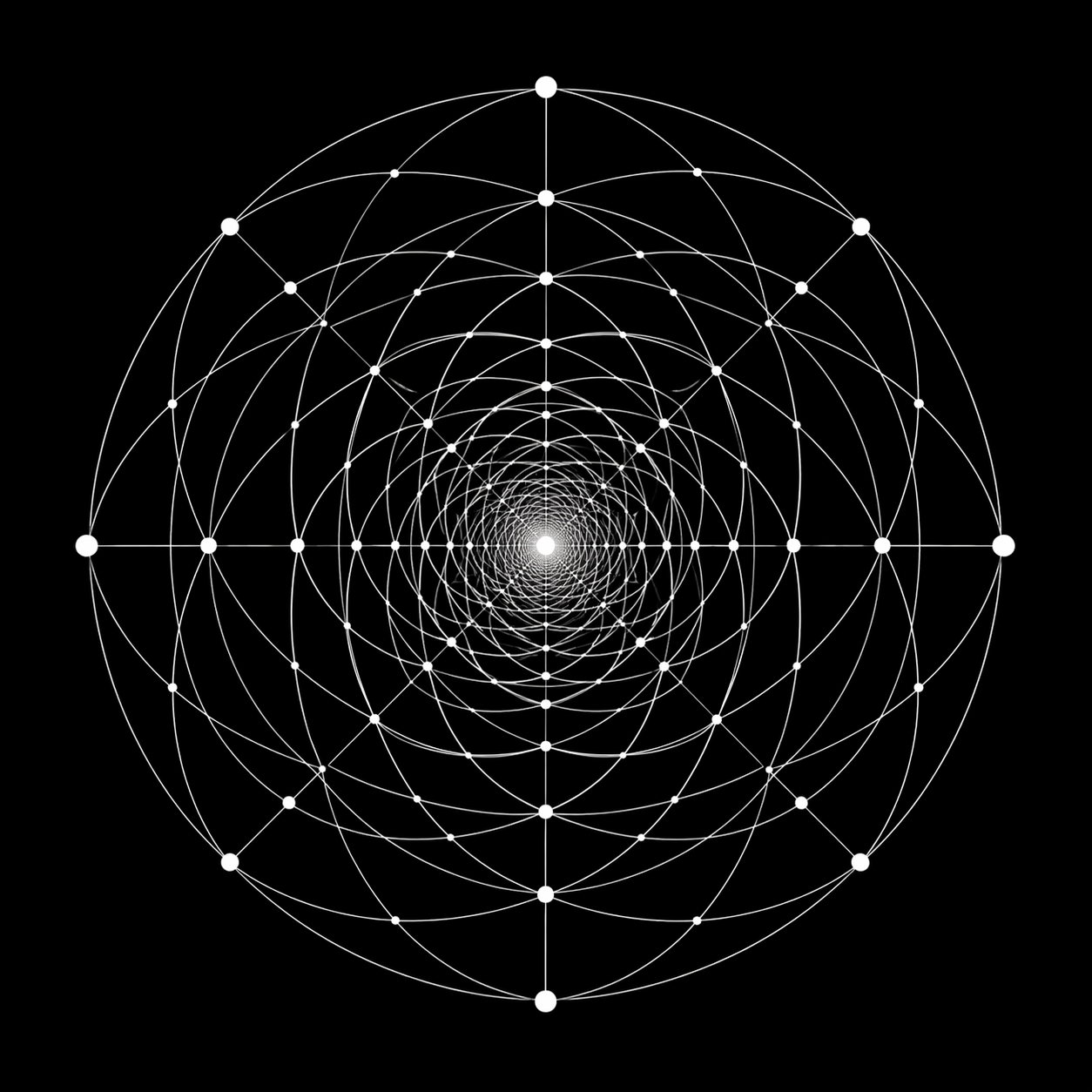
UTFANSWF

A five-layer framework connecting concept, mathematics, and real-data validation.

Built from Zero State → SWF-ISM → ANSWF → SANSWF → Unified Embedding, UTFANSWF is designed to be reproducible, falsifiable, and openly testable.

Start Here Read the Paper Origin: The Book

Start Here

Quick Facts

Why UTFANSWF Exists

UTFANSWF began as an attempt to understand how structured reality can emerge from a neutral origin state. Those early ideas were first explored conceptually in Spherical Wave Function: Inflating the Spherical Moment. UTFANSWF is where that conceptual work becomes a formal framework: layered mathematics, physical structure, explicit constraints, and real-data testing.

The result is not just a set of speculative ideas. It is a framework built to be challenged, measured, reproduced, and extended.

In Plain Terms

Most theoretical work describes how the universe might behave. UTFANSWF is structured to be executed, tested, and evaluated against real data.

Instead of relying on interpretation alone, it defines explicit checkpoints where the framework must agree with observation — or fail.

Framework Excerpt

UTFANSWF is constructed as a layered framework beginning from a neutral origin state and progressing through successive structural refinements into a unified physical embedding. Each layer is not introduced arbitrarily, but emerges from the constraints imposed by the previous layer, forming a chain of dependence that is both directional and testable.

The Zero State establishes the baseline condition: a system defined not by absence, but by balanced neutrality. From this state, the Spherical Wave Function — Information State Model (SWF-ISM) provides the first structured description of how information propagates and organizes within a spherical expansion context. This introduces the initial geometry of emergence without presupposing specific particle content or interactions.

The framework then advances through the Alexander Neutral Spherical Wave Function (ANSWF), which constrains the system through effective field relationships, and the Symmetry-Adapted Neutral Spherical Wave Function (SANSWF), where gauge structure and symmetry considerations are introduced in a controlled and consistent manner. These layers refine the system from a conceptual model into a physically interpretable structure.

The unified embedding stage integrates these components into a coherent framework capable of interfacing with established physical domains, including cosmology, particle physics, and gravitational phenomena. At this stage, the framework is no longer purely descriptive — it is operational, producing measurable outputs and predictions.

UTFANSWF is designed to be evaluated through explicit validation gates rather than narrative consistency alone. Rows 19–26 define these gates, testing the framework against real datasets, including cosmological observations, gravitational-wave measurements, and axion search constraints. Each gate produces a defined outcome, ensuring that the framework remains accountable to observation.

In this way, UTFANSWF is not presented as a finished answer, but as a structured system intended to be tested, refined, and, if necessary, falsified. Its value lies not only in the results it produces, but in the clarity of the path it provides from concept to measurable outcome.

From Concept → Math → Tested System

Concept

Neutral origin, spherical emergence, structured formation, and the transition from intuitive geometry to organized physical behavior.

Mathematics

Zero State → SWF-ISM → ANSWF → SANSWF → Unified Embedding

A layered construction intended to move from first principles into formal physical structure.

Validation

Rows 19–26 test the framework against reproducibility, cosmology, axion windows, ringdown behavior, AI guardrails, and structured stress tests.

What Makes UTFANSWF Different

What Can UTFANSWF Be Tested Against?

UTFANSWF is designed to be tested in the open. It is meant to survive scrutiny — or fail under it.

Who This Is For

Current Status

UTFANSWF is currently presented through the v20 release and accompanying reproducibility bundle.

What PASS Means

How UTFANSWF Could Fail

UTFANSWF is designed to be falsifiable. Potential failure points include future cosmological datasets violating compressed fit constraints, axion searches excluding the predicted parameter window, gravitational-wave measurements deviating from the predicted ringdown structure, or breakdowns in consistency conditions under stronger observational pressure.

This is intentional. The framework is built to survive scrutiny if it can — and to show clearly where it does not if it cannot.

Run It Yourself

UTFANSWF is designed to be reproducible. The validation harness can be executed locally using the reproducibility bundle.

1. Extract the ZIP file
2. Open PowerShell in the root folder
3. Run:

python -m harness.run_all_gates

Outputs are written to:

results/results.json
results/ledger.jsonl
results/REPORT.md

This allows independent users to reproduce the validation flow directly rather than relying on summary claims alone.

Where It Began

Spherical Wave Function Book Cover

Spherical Wave Function: Inflating the Spherical Moment

Before UTFANSWF became a formal framework, it existed as a conceptual push: how does organized structure emerge from a neutral state? The book captures that earlier stage — the intuition, imagery, and structural thinking that later evolved into the layered mathematics of UTFANSWF.

“Learn about a thing, you can manipulate a thing.”

Book ↔ Framework Crosstalk

  • The book develops the conceptual origin state and emergence logic.
  • UTFANSWF formalizes that intuition into layered mathematics.
  • The gate suite tests whether the framework survives contact with data.
Purchase (Barnes & Noble) Purchase (Amazon)

Read, Download, Reproduce

Access UTFANSWF, the current release materials, and the reproducibility pathway below.

View Paper (rxiVerse) Download PDF Request Reproducibility Bundle

About the Author

Ronald L. Alexander is an independent researcher working at the intersection of computation, structure, and physical modeling. With a background in computer science and large-scale system design, his work emphasizes constraint-driven construction, reproducibility, and executable frameworks rather than purely abstract formulations.

His experience includes building and maintaining full-stack enterprise systems, particularly data and reporting platforms designed for reliability, scalability, and continuous operation. This systems-oriented perspective directly informs the architecture of UTFANSWF, which is structured not only as a theoretical framework but as a testable, operational system.

He is the author of Spherical Wave Function: Inflating the Spherical Moment, which explores the conceptual foundations of structured emergence from a neutral origin state. UTFANSWF extends that work by formalizing those ideas into a layered mathematical framework with explicit validation gates and direct interfaces to real data.

The ongoing focus of this work is the development of a unified framework that remains grounded in measurable outcomes, open evaluation, and long-term refinement through testing and extension.

Contact

Ronald L. Alexander
ronald.l.alexander@outlook.com